Back to Hub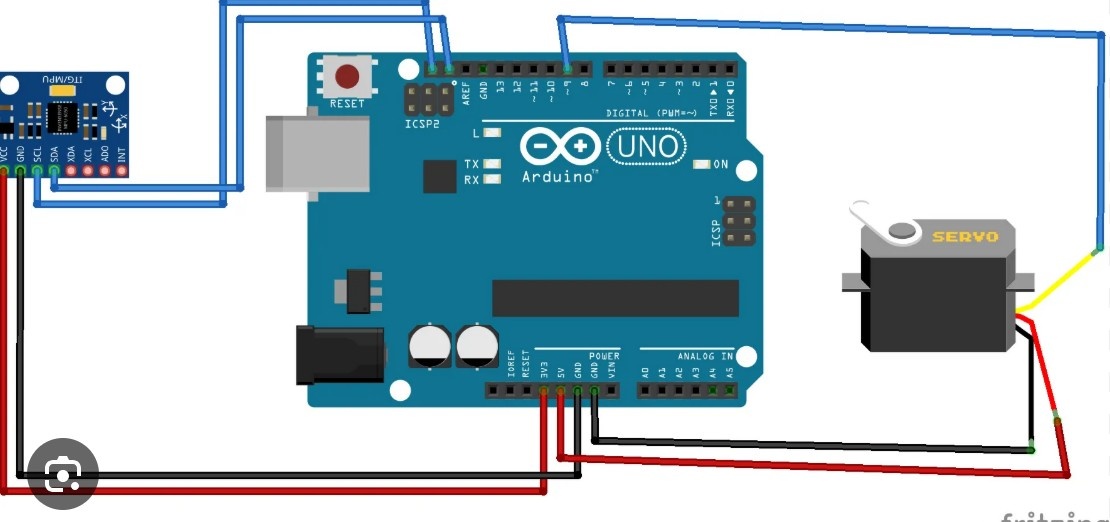
mpu6050 controlled Servo motor
April 8, 2026 Watch Tutorial
Wiring Schematic
Hardware Required
- Arduino BoardBuy on Amazon
Source Code
Arduino / C++
1#include <Wire.h>
2#include <Servo.h>
3
4const int MPU_addr = 0x68; // Standard I2C address of the MPU-6050
5int16_t AcX, AcY, AcZ;     // Variables to store raw accelerometer data
6
7Servo myServo;
8
9void setup() {
10  Serial.begin(115200);
11
12  // Attach the servo to Pin 9 on the Mega
13  myServo.attach(9);
14
15  // Initialize I2C communication
16  Wire.begin();
17
18  // Wake up the MPU-6050
19  Wire.beginTransmission(MPU_addr);
20  Wire.write(0x6B);  // Target the Power Management register
21  Wire.write(0);     // Write a 0 to wake it up
22  Wire.endTransmission(true);
23
24  Serial.println("MPU6050 is awake! Ready for REVERSED front/back movement.");
25
26  // Start the servo in the middle, safe position (90 degrees)
27  myServo.write(90);
28  delay(1000);
29}
30
31void loop() {
32  // Start reading from the MPU6050
33  Wire.beginTransmission(MPU_addr);
34  Wire.write(0x3B);
35  Wire.endTransmission(false);
36
37  // Request 6 registers total
38  Wire.requestFrom(MPU_addr, 6, true);
39
40  // Read the raw data
41  AcX = Wire.read() << 8 | Wire.read();
42  AcY = Wire.read() << 8 | Wire.read(); // Y-axis (Front-to-back)
43  AcZ = Wire.read() << 8 | Wire.read();
44
45  // Constrain raw Y so it doesn't glitch
46  int constrainedY = constrain(AcY, -17000, 17000);
47
48  // REVERSED LOGIC: Map the Y-axis to 165 -> 15 instead of 15 -> 165
49  int servoAngle = map(constrainedY, -17000, 17000, 165, 15);
50
51  // Move the servo safely
52  myServo.write(servoAngle);
53
54  // Print values to the Serial Monitor
55  Serial.print("Raw Y: ");
56  Serial.print(AcY);
57  Serial.print(" | Reversed Servo Angle: ");
58  Serial.println(servoAngle);
59
60  // Small delay for smooth movement
61  delay(50);
62}